Showing posts with label Carrot. Show all posts

August 13, 2014

Chard rolls

August 13, 2014
1-chard
A recent hypothesis put forward by Dr. Chris Lowry, who is a neuroscientist in Bristol University, suggests that a strain of harmless bacteria (Mycobacterium vaccae) in the soil may trigger the release of serotonin which regulates our feelings of well-being. To inhale this naturally occurring antidepressant while repotting herbs in the balcony, weeding out dandelions in the garden, raking leaves in the backyard and hiking in the woods is an exciting idea, and makes more sense than popping Prozac in the mouth.

At the same time, the theory sadly reveals the degree to which we have alienated from our roots and the rest of the creation. When a scientist speculates that it might make kids more joyful and smarter if we introduced outdoor facilities in school environments where they would be exposed to nonpathogenic organisms, I can’t help but being sarcastic. Really? Any cute little piglet could teach us a lesson about the comfort of playing in dirt. Happy as a pig, they say.
2-chard3-chard
Unhappiness is a serious problem in our society and it would be inappropriate to write about it maliciously – especially today, while the headlines talk about the suicide of a loved entertainer who professionally mastered comedy, but privately battled with alcohol and drug abuse, and depression. Tragically, such a conflict of character and position is more common than we dare to think, and reminds us that happiness is not a situation but an experience.

Our mind incessantly chases after pleasure and attempts to eradicate discomfort through the senses, but the soul – the real self who animates the body, and as whom we remain even after the body ceases to be – is of different energy and, thus, unimpressed by any amount of material perfection. Just like a fish cannot thrive out of water, whether it lies in a crystal bowl or on a bed of sand, the self cannot access transcendental bliss – which is the natural state of the soul – until we start developing our consciousness.
3b-chard
Having spent a good part of the summer in the garden, I agree that being in contact with earth and other natural elements contributes to a peace of mind – and there may even be a connection between the scent of compost and our serotonin levels – but as a spiritual person, I refuse to reduce my capacity for fulfillment to a mere biochemical reaction. Isn’t that exactly what so many have unsuccessfully tried to do by using marijuana, amphetamines, and psychedelics?

We want an easy way out from suffering but are reluctant to accept any alternative that requires adjusting our perception, values or way of living – even when it is free and available for everyone. It would be interesting to know how many of us would rather puff, inject or swallow Mycobacterium vaccae in a laboratory than, on a regular basis, pull down the socks, step aside from the paved streets and wander beyond the blocks of concrete where our children could climb trees and explore what is under a rock.

Perhaps we fear the nature – inside and outside of us – because it unveils of what a great biological, psychological, spiritual and devotional symbiosis we are a part of. We have worked so hard to disconnect and unlearn who we really are!
4-chard5-chard
Gardening is great because it displays all aspects and stages of life within a short season and one has to be really stubborn not to sympathize with the relationships and events involved. Watching a seed grow into a sprout and mature plant that gifts a vegetable or fruit is bonding and rewarding.

It’s not even the harvest that makes horticulture purposeful but the sense of belonging it offers. Getting to know our extended family, in which various kinds of winds, raindrops, sunrays, mineral particles and organic matter share their special talents and wisdom is fun; it may not directly make us self-realized but it helps us to act thoughtfully, considerately, caringly and compassionately. Then, when we carry a basketful of spinach, carrots and herbs to home and cook them for the pleasure of those we love and want to interact affectionately with, we are a step closer to lasting happiness. There will never be a vaccination - Mycobacterium vaccae or anything else – that will supersede a balanced lifestyle and conscious endeavor to evolve as a spirit soul!
6-chard7-chard
Since June we have eaten mainly what our garden has produced: radishes, lettuce, kohlrabi, turnips, spinach, chard, kale, beetroots, carrots, zucchini, beans, peas, cucumbers, tomatoes and herbs. A few days ago I dug up some of the potatoes. Brussels sprouts, broccoli, winter squash, peppers and chili are still developing. These colorful fellows are a real boon! They are so pure and tasty that I don’t want to complicate them with anything else but olive oil and simple spices.
8-chard9-chard
Unfortunately I have lost the paper on which I had scribbled the recipe while making the chard rolls last week. I will give the ingredients here and you will have to figure out the rest if you want to make them. Take the concept and perfect it according to your taste!
10-chard11-chard
Thank you.


May 26, 2014

garden spirit

May 26, 2014
1-garden8-garden
Those who garden here know the sub-arctic weather remains unstable until the second week of June. At one moment the sky is clear and the temperature may climb up to thirty Celsius (86 F). Then, all of a sudden, colors become saturated and air cools down to its dew point; next, frozen crystals, as small as marbles and large as tennis balls, beat the ground. It makes the summer season short and horticulture a challenge. Nonetheless, urban farming is popular in Helsinki.

The city provides about fifty areas with thousands of land parcels; sometimes they have a small pavilion or cottage built in. Additionally, environmental organizations, residential associations and housing cooperatives offer land for community gardening. This year I rented half an acre lot only three minutes bike ride from our home.
3-garden4-garden
After a month of shovelling, raking and uprooting undesirable invaders, I’ve grown to appreciate soil as a good teacher. It is demanding but, also, rewarding. I have taken a special interest in the resilience of weeds. Judging by their success to compete with pampered vegetable seedlings, they are far from being inferior. The idea of a plant as a nuisance reflects human purpose and bias; in nature’s scheme, wild and feral species may also serve a useful function. Many of them have medicinal value. Their adaptability to diverse and adverse circumstances is admirable. They reproduce profusely and may bear quantities of seeds that travel distances by the means of feathery parachutes, or attaching themselves into clothing or animal fur by tiny hooks, burs and cleavers. They may also stay dormant for years until they find a favorable condition to grow. Many multiply from broken bits of stem or root; even after drying up, they may regenerate. If left unchecked, they will dominate the environment, and rob water and nutrients from crop plants.
5-garden
Horsetail which grows abundantly in my garden is an old remedy for liver and urinary disorders; it contains large amounts of silicon, tannin and potassium. The roots have a nutty flavor but, oh, they are so persistent and long that you never get them entirely out! The moment you look elsewhere, they have already shot a new sprout.

Dandelions are known for their propensity to purify blood and reduce fever. They are rich in vitamin C and A, calcium, iron and minerals. To salads, the leaves add a strong flavor. You can also make fritters (pakora) by coating the flowers with a spicy batter!

Nettle is my favorite ferine by far. Although it has not (yet!) pushed into my garden, it has occupied my neighbor’s compost, and provided us many mouth-watering meals! Use it like spinach.
6-garden7-garden
For a reason, yoga philosophy compares unfavorable qualities to weeds. The heart is the seat of consciousness and sacred matters. As soon as it fills with ulterior motives, the natural upliftment of spirit is hindered. Therefore, sad-vargah or the six enemies of the mind – lust, greed, anger, envy, fear and delusion – are to be nipped at the earliest stage. They are interrelated and arise from a contact with lower modes of nature – passion and ignorance – through contemplation and activities, and entangle the soul in the intricacies of karma and the cycle of birth and death, samsara, making us both, disinterested and indifferent to enlightenment.
16-garden9-garden
When the seed leaves are young, it is difficult to tell if a plant is genuine or spurious. You have to let it grow and exhibit clear marks of botanic classification before uprooting it. Sometimes you have to dig very deep in order to track the starting point; many times it is impossible to find the origin. You can't cheat by pinching the foliage off and leaving the underground core untouched because, sooner or later, it will develop a new stem and leaves. In fact, the base problem becomes even more aggressive and arrogant, stealing nutrients and space from legitimate creepers. Weeds take away and turn against the real interest of the soul, although they may play a productive role in pursuing materialistic values in their natural habitat.
11-garden10-garden
Working in the field is heavy. Having done non-physical activities for the past year and a half, I welcome muscle pain and exhaustion. It triggers solid sleep and healthy appetite. Contrary to my assumption, it has made me eat lighter and less. I crave for fruits, juices and salads; rice, dal and vegetable dishes appear too sumptuous. One meal a day seems enough. In the afternoon I may roll parathas or make other pastries.
12-garden13-garden
This spontaneous recipe for vegetable tarts expresses the garden spirit. You can make the crusts beforehand and top them just before serving. Use any vegetables available.
14-garden2-garden
Thank you.


October 25, 2012

Pumpkin & Rosemary Soup

October 25, 2012
1Pumpkinsoup2Pumpkinsoup
When we moved to Finland with my husband, it was May 2000. Patches of snow still lined a few shadow corners of Helsinki but winter was well underway towards the south of equator. However, a country of which one third rests above the Arctic Circle never really wakes up from the polar night. Even in the summer the northern wind is just snoozing, as if recharging. The presence of the Arctic Ocean is coded in every breeze. At any time, it may descend as an avalanche of icicles piercing the layers of clothes, skin, fat and bones. Nothing escapes from such coldness. The day we moved here it showed the last breath of power in the face of summer and around October, every year, it claims back the authority. Today it arrived with a message of winter. It won’t be long there is snow.
3Pumpkinsoup4Pumpkinsoup
Soup is a weapon against chill and darkness. There isn’t a better ammunition than pumpkin, the offspring of autumnal colours, combined with rosemary that has an aroma of burning wood.
5Pumpkinsoup6Pumpkinsoup
The appetite will be satisfied by paneer that extracts the humour of each ingredient in the soup causing the goodness of milk to burst in the mouth like a soft fountain of flavours. To add texture, garnish with a handful of oven roasted parsnip chips.
7Pumpkinsoup8Pumpkinsoup
Thank you.

November 9, 2011

Carrot & Squash Cupcakes

November 9, 2011
Cupcake1Cupcake5
Are we going to have one of those sugar-free days today, my husband asked this morning. Don’t let the innocent tone deceive you. It translates to: you better make something sweet!

It turned out to be a good idea. Because I had leftover squash and carrots, I made cupcakes. In addition to cake-flour, I used potato-starch and wholegrain spelt in the batter. Potato-starch is excellent in cakes. It makes them light. Because I added more wet ingredients than usually, I thought wholegrain flour would bind and give structure to the batter. It did. The cupcakes were perfect: airy, buttery and moist. The recipe would make a beautiful cake, too. Because there are vegetable jam and spices – cinnamon, cloves, cardamom and ginger – it would be tasty even without a filling or frosting.

While the cupcakes were baking, I cooked down the rest of the grated carrots and squash into a thick paste with butter, milk, raw sugar and vanilla. It took about an hour and by the time the fudge was ready, the cupcakes had cooled down. I cut a circular cone out of the top of the cupcakes, filled them with the paste and placed the cones upside down back on the top. The cupcakes were so tasty by themselves that you can omit this step. As plain, they are good enough.

I forgot to write down the measurements for the frosting. Sorry! Once you know the ingredients, you’ll be able to improvise. If you want to make more representative cupcakes with a decent piping, make the frosting less wet than I did! For some reason, I like things to drip and drop, and look a bit messy. Aren’t we always attracted by the opposites?

The cupcakes don’t preserve well. They dry up quickly. It is better to eat them as soon as they are ready. It’s not a problem, is it?
Cupcake6Cupcake4
A tip: You can make cupcake liners by cutting decorative paper cups into a proper size.
Cupcake3Cupcake7Cupcake8Cupcake2
Thank you.

July 12, 2011

Spinach & Paneer

July 12, 2011
Have you ever thought why spinach and other green vegetables are portrayed as undesirable in children's books and shows? It dawned to me when travelling in Romania in the winter of 1991. (Sounds like a hundred years ago!) The country was still in a transition after the revolution and execution of President Ceausescu. The shops were empty. Only canned, preserved spinach was available for cooking. It was far from fresh, had a suspicious odour and looked like sewage. We ate it for two weeks. The bad reputation of greens must originate from a similar source. It wrongfully defames spinach that is newly picked from the garden.

AN ENCOUNTER WITH DRACULA?

Since we are on the memory lane, let me tell a little more about the trip. Other than foodwise, it was adventurous. I accompanied two Romanians and a Dane in a van turned into a-camper-sort-of-a-car. It looked like a DIY invention a long before recycling had become popular.

The route from Sofia (Bulgaria) to Timisoara (Romania) seemed a good idea, and much shorter, on a map. Factually, it was about 400 kilometres (250 miles) of rattling ride in a tin jar on wheels. After barely crossing the mountains we entered Transylvania at the crest of night. I say barely, because the vehicle was huffing and puffing, as if suffering from a shortage of breath. Soon we were out of breath, too.

I still had my reading glasses on when I dozed off for a moment. BAM! My glasses broke. However, the jingling sound came from the windshield. The car had hit a tree. Tad-Adina, who was sitting on the back with me, had a cut on her forehead. Her husband, our driver, pulled us out quickly. The Dane panicked. The tree that had stopped us was rooted on the edge of a cliff.

Because horror or thriller is not my taste of emotion, I was not affected by the fable of Dracula in Transylvania. The Dane, on the other hand, seemed to have more vivid imagination and insisted we will die: if not naturally, then unnaturally. Although I assumed it was his shock speaking, I had to agree there was an unusual atmosphere and vibe. Not pleasant. There was something unsettling in the air, dark on a metaphysical way. Perhaps it was ignorance and fear of unknown.

We collected our belongings and walked to the roadside. There were no streetlights, housing or traffic. We tried to keep the Dane calm, took out the prayer-beads and did what we always do: anywhere and everywhere; in happiness and distress; whether day or night. Meditation is such a natural, non anxiety way of passing time, even in the most unexpected circumstance. It changes the direction of thinking, feeling and willing. It happens in the comfortable zone of heart, beyond the temporary ups and downs that have nothing to do with the reality of the self. Accidents happen to the body, not to the soul. Ananda, bliss, is the language of soul.

Since I’m writing about the incident over twenty years later, we survived. We were not snatched by the Dracula. Instead, a tractor with a wagon (oh, how convenient!) passed by at one point and took us to an old watch-tower of militia, a reminiscent of the communistic era, where we spent the rest of the night. In the morning a tall man with our teacher, whom we had come to assist in establishing a yoga-centre, came to pick us up. Little did I know, the tall man became my husband three years later. Was he my Prince in armour? At least he was driving a car that wasn’t falling apart!

In retrospect, maybe it was a blessing there was only slimy spinach available after such an eventful arrival in Timisoara. It created stability to eat it every day.

Eventually, the tall man and our teacher dropped me off in Hungary, where I climbed in an airplane and flew back to Bulgaria. During the flight two men attempted to hijack the plane but were pushed on the floor and handcuffed by the flight attendants. I will tell the story if I ever post about airplane food! Which, by the way, I don't touch even with a stick :-)

AN ARREST

For some reason (read karma) my visits to Romania have always triggered dangerous encounters. Once I hopped in a bus in Athens (Greece) only to be arrested on the Serbian border. I had been told in the Embassy of Serbia, as a Finn, I didn’t need a transit visa in passing through to Romania. The border guards disagreed and threw me in jail. The next morning a compassionate bus-driver, a Greek (efharisto!), saw me shaken by the experience and took me back to Athens for free. Two days later I successfully crossed all the borders with a proper visa and reached Timisoara again. Needless to say, my knees were soft on the Serbian border.

THE MIDLIFE LETHARGY

The recent years have brought me under the safe planetary influences and my life is boring by all standards. I like it this way and wouldn’t have the energy for pioneering I was so keen in youth. The wildest excursions I partake are to the Indian and Turkish markets twenty minutes bike ride from home. They carry the spices I need and offer an occasional shipment of fresh vegetables. As unfair and ecologically concerning as it sounds, the quality and prices are often way better. Besides, we have Finnish vegetables, spinach included, available for about a month per year. For the rest: turnips, cabbage and snow. Yay!

No, no says the tall man, pumps my bike and sends me to the market. It is my pleasure to serve him rice, dal (lentil soup), simple spinach with paneer (fresh cheese) and roasted carrots for lunch. His eyes are smiling. As a husband, he has turned out to be much more than a safe driver. The Prince in armour? Who knows.


SPINACH & PANEER

Fresh spinach
Ghee or oil
Fresh ginger, grated, juice squeezed out
Fresh Chili cut in half or tiny pieces
Turmeric
Coriander powder
Ground nutmeg
Hing
Black pepper
Raw sugar
Whey from cheese making
Paneer
Salt

Here comes an exercise of reasoning! I had a ¾ shopping bag full of spinach. No idea about the weight. It was quite a lot. When I blanched it, it shrank to the size of two palms. Please, adjust the spices according to the amount of spinach you have. Oh, I’m useless with recipes...sorry!

Wash the spinach by soaking in plenty of water and rinse it a few times
Blanch the spinach in boiling water for about a minute
Chop it finely
Heat up the ghee or oil
Add the fresh ginger (without juice) and fresh chili
When the ginger is turning golden, add coriander powder, nutmeg, hing, black pepper and sugar
Turn once, add the spinach
If it sticks to the bottom, add whey or water
Cook it for about 10 minutes
Finally add the paneer and salt

If it was for guests or for a special occasion, I would add cream to the recipe. I would also lightly fry the paneer to give it a more pronoun texture and crispiness.

There are many ways to spice spinach. This one has an emphasis on nutmeg. It adores spinach! It is a fresh, nutty and warm spice.


HOW TO MAKE PANEER

3 litres milk
1 litre cultured buttermilk

Bring the milk to boil
Add the buttermilk
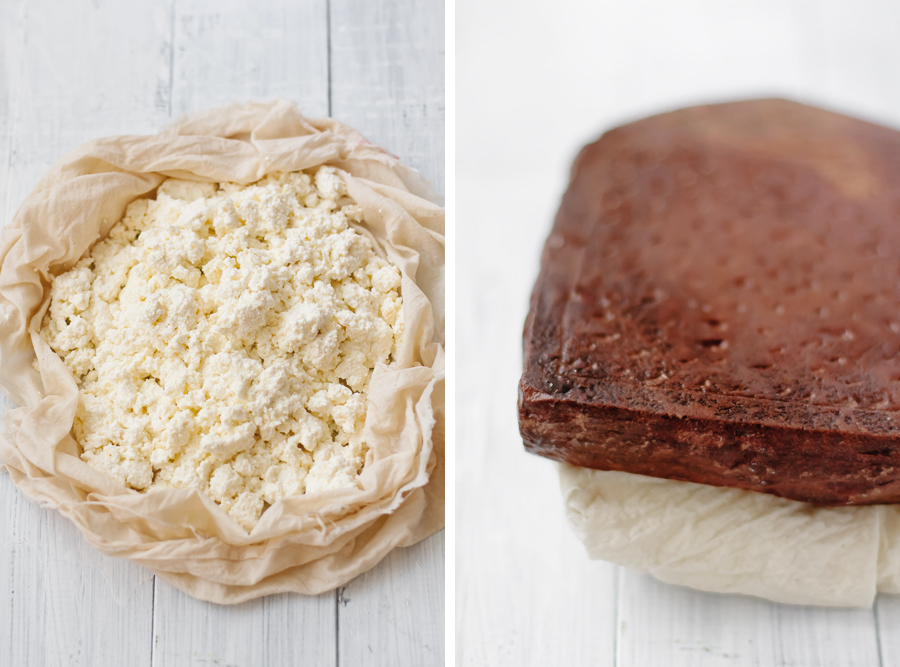
Collect the cheese curd to a sieve or cotton cloth
Press under a weight for 10 minutes (longer pressing will result a dryer cheese, we want it moist and rich)
Cut into cubes
Add to the spinach

Cultured buttermilk is different from the buttermilk that comes from butter churning. It is fermented and thick as yoghurt but has a different taste. It might be a Scandinavian product; I’ve never seen it outside. Kefir is similar to it.

Instead of cultured buttermilk you can use yoghurt or lemon to separate curd from whey. The whey should have a clear, light and greenish hue. Always save it! It is excellent in baking and cooking (use it for boiling rice or as a base for soups and stews, for example). Sometimes it happens there is too much whey left. Let your plants drink it and they will thank you.

ROASTED CARROTS

Carrots
Olive oil
Black pepper
Hing
Salt
Herbs

Wash, peel and cut the carrots
Mix everything
Roast in 220 C until they look fantastic!